

Accurately measuring the forging force of a metal forging press is a critical aspect in the metalworking industry. As a supplier of Metal Forging Press, we understand the significance of this measurement in ensuring the quality, efficiency, and safety of the forging process. In this blog, we will explore the various methods and considerations for accurately measuring the forging force of a metal forging press.
Understanding the Importance of Measuring Forging Force
Before delving into the measurement methods, it is essential to understand why measuring the forging force is so important. The forging force directly affects the quality of the forged parts. If the force is too low, the metal may not be fully deformed, resulting in incomplete filling of the die and poor mechanical properties of the final product. On the other hand, if the force is too high, it can cause excessive wear on the die, increase energy consumption, and even lead to damage to the forging press itself.
Moreover, accurate measurement of the forging force allows for better process control. By monitoring the force during the forging process, operators can detect any abnormalities or deviations from the expected values, which can indicate potential problems such as material defects, die wear, or improper lubrication. This enables timely adjustments to be made, reducing the likelihood of producing defective parts and minimizing downtime.
Methods for Measuring Forging Force
There are several methods available for measuring the forging force of a metal forging press. Each method has its own advantages and limitations, and the choice of method depends on various factors such as the type of forging press, the accuracy requirements, and the cost.
Strain Gauge Method
The strain gauge method is one of the most commonly used techniques for measuring forging force. Strain gauges are devices that measure the strain (deformation) of a material when a force is applied. By attaching strain gauges to a component of the forging press that is directly affected by the forging force, such as the ram or the die holder, the strain can be measured and converted into a force value using Hooke's law.
The main advantage of the strain gauge method is its high accuracy. Strain gauges can provide precise measurements of the forging force, even for small changes in force. They are also relatively easy to install and can be used in a wide range of forging presses. However, strain gauges are sensitive to temperature changes and mechanical vibrations, which can affect the accuracy of the measurements. Therefore, proper calibration and compensation techniques are required to ensure reliable results.
Load Cell Method
Load cells are another popular choice for measuring forging force. A load cell is a transducer that converts a force into an electrical signal. Load cells can be installed in various locations on the forging press, such as between the ram and the die or under the bolster plate. When a force is applied to the load cell, it generates an electrical signal that is proportional to the force.
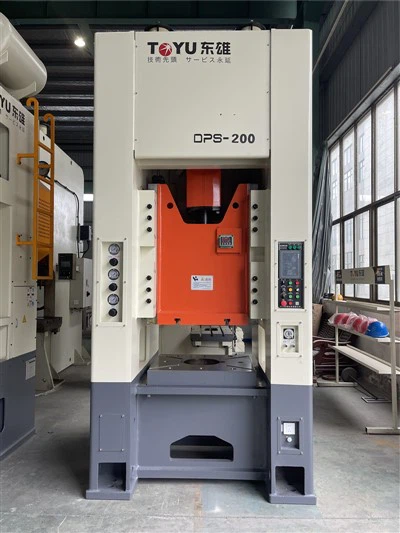

The load cell method offers several advantages. Load cells are highly accurate and can provide real-time measurements of the forging force. They are also relatively robust and can withstand high forces and harsh operating conditions. However, load cells can be expensive, especially for high-capacity applications. Additionally, they require proper installation and calibration to ensure accurate measurements.
Hydraulic Pressure Method
In hydraulic forging presses, the forging force can be measured indirectly by measuring the hydraulic pressure in the cylinders. The hydraulic pressure is proportional to the force applied by the cylinders, and by using the known area of the piston, the forging force can be calculated.
The hydraulic pressure method is relatively simple and cost-effective. It does not require the installation of additional sensors, as the hydraulic pressure can be measured using existing pressure gauges. However, this method has some limitations. The accuracy of the measurements depends on the accuracy of the pressure gauge and the calibration of the hydraulic system. Additionally, factors such as leakage and friction in the hydraulic system can affect the accuracy of the measurements.
Piezoelectric Method
The piezoelectric method is a more advanced technique for measuring forging force. Piezoelectric sensors generate an electrical charge when subjected to a mechanical force. By using piezoelectric sensors, the forging force can be measured directly and in real-time.
The piezoelectric method offers high accuracy and fast response times. It can also measure dynamic forces, which is important in high-speed forging processes. However, piezoelectric sensors are relatively expensive and require specialized equipment for signal conditioning and data acquisition.
Considerations for Accurate Measurement
In addition to choosing the appropriate measurement method, there are several other considerations that need to be taken into account to ensure accurate measurement of the forging force.
Calibration
Calibration is a crucial step in ensuring the accuracy of the measurement system. The measurement device, whether it is a strain gauge, load cell, or pressure gauge, needs to be calibrated regularly to ensure that it provides accurate and reliable measurements. Calibration should be performed using a known reference standard, and the calibration results should be documented and traceable.
Environmental Factors
Environmental factors such as temperature, humidity, and vibration can affect the accuracy of the measurement system. Therefore, it is important to ensure that the measurement device is installed in a suitable environment and that appropriate measures are taken to minimize the effects of environmental factors. For example, strain gauges and load cells should be protected from excessive heat and moisture, and vibration isolation mounts can be used to reduce the effects of mechanical vibrations.
Sampling Rate
The sampling rate of the measurement system is also an important consideration. The sampling rate determines how often the measurement device takes a reading of the forging force. A higher sampling rate allows for more detailed and accurate measurements, especially in high-speed forging processes where the forging force can change rapidly. However, a higher sampling rate also requires more data storage and processing capabilities.
Data Analysis
Once the forging force measurements have been obtained, it is important to analyze the data to gain insights into the forging process. Data analysis can help identify trends, patterns, and anomalies in the forging force, which can be used to optimize the process and improve the quality of the forged parts. Various statistical and analytical techniques can be used for data analysis, such as histogram analysis, regression analysis, and Fourier analysis.
Our Offerings as a Metal Forging Press Supplier
As a leading supplier of Closed Die forging Machine, Mechanical Forging Press, and Metal Forging Equipment, we are committed to providing our customers with high-quality products and solutions. Our forging presses are equipped with advanced measurement systems that allow for accurate and reliable measurement of the forging force.
We offer a range of measurement options, including strain gauge, load cell, and hydraulic pressure methods, to meet the specific needs of our customers. Our measurement systems are designed to provide real-time data and can be integrated with our control systems for seamless process monitoring and control.
In addition to our products, we also provide comprehensive technical support and training services to ensure that our customers can operate and maintain our forging presses effectively. Our team of experienced engineers and technicians is available to assist with installation, commissioning, and troubleshooting, as well as to provide advice on process optimization and quality improvement.
Conclusion
Accurately measuring the forging force of a metal forging press is essential for ensuring the quality, efficiency, and safety of the forging process. By choosing the appropriate measurement method, considering the environmental factors, and performing proper calibration and data analysis, operators can obtain accurate and reliable measurements of the forging force.
As a Metal Forging Press supplier, we are dedicated to providing our customers with the latest technology and solutions for measuring forging force. If you are interested in learning more about our products and services, or if you have any questions or concerns, please do not hesitate to contact us. We look forward to the opportunity to discuss your forging requirements and to provide you with the best possible solutions.
References
- [Author's Last Name, First Name. "Title of the Book." Publisher, Publication Year.]
- [Author's Last Name, First Name. "Title of the Article." Journal Name, Volume, Issue, Publication Year, Page Numbers.]
- [Website Name. "Title of the Web Page." URL, Accessed Date.]